
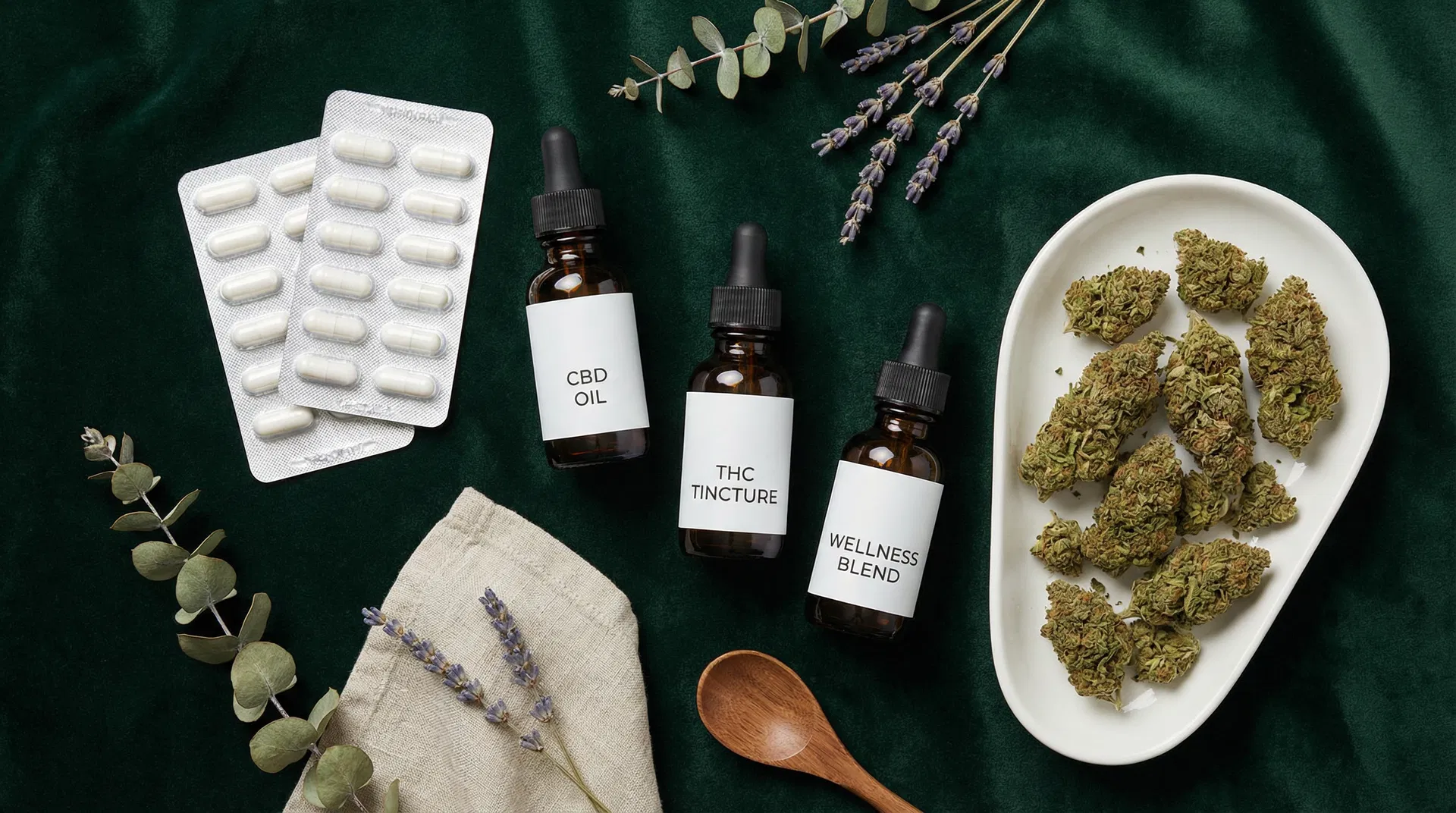
CBD and THC are the two primary cannabinoids in medical cannabis products. Understanding the difference between them is essential for patients considering treatment.
What Are Cannabinoids?
Cannabis contains over 100 different chemical compounds known as cannabinoids. Of these, two are of primary clinical significance: CBD (cannabidiol) and THC (tetrahydrocannabinol). Both interact with the body's endocannabinoid system (ECS), but they do so in very different ways and produce very different effects.
THC: The Psychoactive Cannabinoid
THC is the primary psychoactive component of cannabis — it is the compound responsible for the 'high' associated with recreational cannabis use. It works by binding directly to CB1 receptors in the brain and central nervous system.
In a medical context, THC has several important therapeutic properties:
- Analgesia (pain relief) — THC is a potent analgesic, particularly effective for neuropathic pain
- Anti-emetic — reduces nausea and vomiting, particularly in chemotherapy patients
- Appetite stimulation — useful in cancer and HIV/AIDS patients experiencing weight loss
- Muscle relaxation — reduces spasticity in MS patients
- Sleep promotion — reduces sleep latency (time to fall asleep)
However, THC also carries risks: it can cause anxiety and paranoia (particularly at high doses), impairs driving ability, and carries a risk of psychological dependence with long-term use.
CBD: The Non-Psychoactive Cannabinoid
CBD does not produce psychoactive effects and does not cause a 'high'. It interacts with the endocannabinoid system more indirectly than THC, modulating rather than directly activating cannabinoid receptors.
CBD's therapeutic properties include:
- Anxiolytic (anti-anxiety) — reduces anxiety through multiple mechanisms including serotonin receptor modulation
- Anti-inflammatory — reduces inflammation through inhibition of inflammatory pathways
- Anticonvulsant — reduces seizure frequency in certain forms of epilepsy (Epidyolex, a purified CBD preparation, is licensed for this purpose)
- Neuroprotective — may protect nerve cells from damage
- Sleep promotion — at higher doses, promotes sleep without the REM suppression associated with THC
CBD has a significantly better safety profile than THC and is not subject to the same driving laws.
The Entourage Effect
An important concept in medical cannabis pharmacology is the 'entourage effect' — the idea that cannabinoids work better together than in isolation. When CBD and THC are combined (along with other minor cannabinoids and terpenes), they appear to produce greater therapeutic effects than either compound alone.
This is why many CBMPs are 'full spectrum' or 'broad spectrum' preparations containing multiple cannabinoids, rather than pure CBD or pure THC isolates. The optimal ratio of CBD to THC varies by condition and by individual patient.
Which Is Right for You?
The choice between CBD-dominant, THC-dominant, or balanced preparations depends on your condition, your medical history, and your personal circumstances:
CBD-dominant preparations are typically used for anxiety, PTSD, inflammatory conditions, and epilepsy. They are also preferred for patients who need to drive or who are concerned about psychoactive effects.
THC-dominant preparations are typically used for severe chronic pain, neuropathic pain, cancer-related symptoms, and MS spasticity. They are generally reserved for patients who have not responded to CBD-dominant preparations.
Balanced preparations (roughly equal CBD:THC) are often used for chronic pain, sleep disorders, and conditions where both compounds contribute to the therapeutic effect.
Your prescribing clinician will recommend the most appropriate preparation based on your individual assessment.
A Note on Over-the-Counter CBD Products
It is important to distinguish between prescribed CBMPs and over-the-counter CBD products available in health food shops and online. OTC CBD products are food supplements, not medicines — they are not subject to the same quality controls, and the evidence for their efficacy is much weaker.
Prescribed CBMPs are pharmaceutical-grade preparations with guaranteed potency and purity. If you are considering CBD for a medical condition, we strongly recommend seeking a proper medical assessment rather than self-medicating with OTC products.
Frequently Asked Questions
What is the difference between CBD and THC in medical cannabis?
Will CBD get me high?
Are over-the-counter CBD products the same as prescribed CBMPs?
Ready to Start Your Treatment Journey?
Register as a patient with MEDCANN Pharmacy today. Our specialist clinicians will assess your eligibility and guide you through every step.
Register as a Patient